

Dancing At Sugar Hill
Not "New York's hottest club is...." but something greater

To be a New Yorker, or at least a Brooklynite, means you should be as familiar with the words “Sugar Hill” as you might be with your deli man—that is, hopefully on a first name basis, but if not that, then a knowing wave and a smile will do. You might be wondering, What’s Sugar Hill?1, maybe in disbelief that I’m declaring a ‘hidden gem’ should be as frequented as your local deli, but the point I’m really trying to make is that your local deli/corner store/bodega is probably as significant to your life in your neighborhood (you walk by, you stop by), as I believe Sugar Hill is to dancing in Bed Stuy.
Of my few years in New York, I often found myself passing by this very building on the corner of Nostrand and DeKalb, my curiosity piqued as I gawked at the words DISCO across the awning. It read: Sugar Hill, SUPPER CLUB—RESTAURANT & DISCO. Disco!!!! I had always been curious to go, but never made the time, and through these years I’d read about the supper club in a few news articles—notable for owner Eddie Freeman refusing offers to sell the building amid Bed Stuy’s rapid gentrification, and a stint in 2019-2021 hosting ‘underground’ raves via the techno community. I knew, of course, I had to go, but it was only a matter of when. Somehow it took me this long, but better late than never….


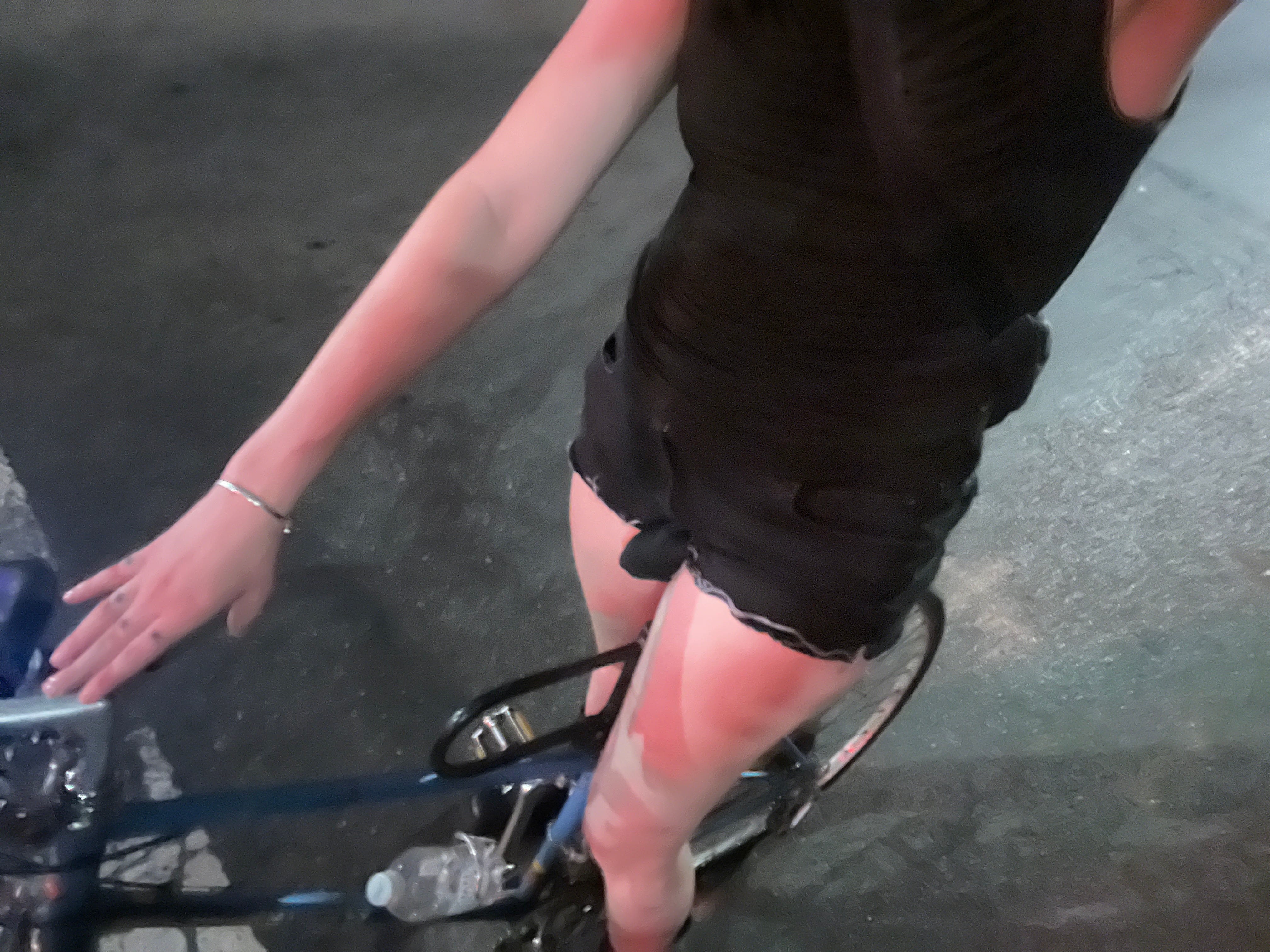
It was supposed to rain all weekend, but it hadn’t, so when I left my apartment to bike to Sugar Hill I knew I was taking a risk. It had been a hot, sticky sunny day and by night it was still warm out, now with an intermittent breeze and an even more troublesome humidity. The very temp that newly marked my association with an East Coast summer, which was inching nearer the way my hair was big and only getting bigger.
As I approached the building, house music rumbled from inside. I locked my bike on the corner and waited for Jaz. There was a side entrance to the bar, I noticed, but with only a few older patrons inside I was intimidated to walk in by myself. A few minutes passed and I relented, but in my attempt to gain entry realized that the door only opened from the inside. An older man inside noticed my confusion and motioned at me through the glass, then got up from his seat and shuffled over. He opened the door. “You gotta go in from around the corner,” he said.
“Oh, thank you! I wasn’t sure.” I asked him if there was a cover, and he said probably $10, which I could pay him right there if I wanted, and not to mention it was house music night.
“Great! That’s ok, I can go around the front, I’m waiting for my friend.” I said.
And that’s when Jaz called looking for me, what timing, and I thanked the man again and headed around the corner to the main entrance, where I found my friend wearing a yellow top and a pink scarf. We hugged and then walked in.
Inside, there was a foyer with a wood staircase and mirror-paneled walls and a dusty statue of a knight in shining armor. The bouncer—Flex, we learned his name, asked us what we were doing here, and we said we came to dance. He asked us if it was our first time at Sugar Hill and we nodded. He waived the cover, we thanked him graciously, and he swung open a low wooden door, leading us into what I’ll call the banquet room.
“This is Sugar Hill. The bar is just around the corner. Enjoy your night ladies.” Flex smiled and left us.
I couldn’t believe my 3.5-Years-Old-New-Yorker eyes. A Saturday night and the place wasn’t packed, barely so, but the music was LOUD, disco lights flittering across a mirrored dance floor, which was surrounded by round banquet tables where groups of older Black folks sat in the dark, chatting and hanging out. The dance floor was sparse, but each person up there made it feel plenty full, moving and dancing like I had walked into a Jane Fonda workout video. By God, I wished I was 13 right now, so I could have had my Bat Mitzvah party here. Or better yet, get married and have my wedding after party here. Or better yet, could you marry a building?
Jaz and I walked around to the bar area, the space I had initially tried to enter, and found another vibe to fall hard for: a light up dance floor (for karaoke, Mondays thru Friday), a pool table, a small bar with red leather stools, dangling glassware, and walls covered in kaleidoscope red paneling. What I imagine it to feel like being on the inside of a disco ball.
We sat down at the bar and ordered drinks, me a gin and soda, Jaz a whiskey on the rocks. We noticed that the nice older man sitting next to us was drinking something milky in a wine glass, which we’d soon learn was called The Eddie Special—named after himself, Eddie Freeman, Sugar Hill’s very owner, sitting next to us on a Saturday night.
The Eddie Special, he told us, was made with Kahlua, whiskey and half n’ half, plus a maraschino cherry. Named after him because back in the day he could drink something like thirteen Eddie Specials in a night, because it’s just what the doctor ordered; it’s what could keep him up dancing all night long back in the day, and plenty convinced, Jaz ordered an Eddie Special and then so did I.


After chugging the drinks quite quickly we were informed to sip it, sip it, otherwise it’d all hit you at once. With our Eddie Specials we hung out at the bar and chatted up a couple from Atlanta who lived in Greenpoint, who had stopped in to plan their joint birthday party there for the very next weekend.
“We love this place,” they said. “Eddie is just the best. You guys should come!”
When the couple disappeared, Eddie jumped up from his chair and beckoned us to follow. “Let me give you a tour,” he said.
He led us back to the front entrance and up the stairs, where he showed us the restaurant, all white table cloths and in the middle, a sleek grand piano. Copies of The New York City Jazz Record, I noticed, were stacked up on a table by the hostess stand, along with awards and photos. Jaz pointed out Former First Lady Hillary Clinton, who we learned had once hosted a fundraiser there while running for Senate.
Eddie showed us the view from the large windows, the grand skylight above the bar, and the large kitchen, though empty and spotless, still smelled warmly like dinner. I asked Eddie why he opened up Sugar Hill, and he told us—the very story echoed in the news articles I’d reread when I’d return home later: that while growing up in Kinston, North Carolina, the small town was separated by the white community and the Black community, with a much-frequented nightlife area called Sugar Hill.
“Everything was happening in Sugar Hill,” Eddie said as we followed him back down the stairs. “So when I moved up here and I opened up this place, back then it was a lot smaller—I knew I had to name it after this happenin’ area back in North Carolina.”
Eddie ended the tour back at the bar, where we thanked him for his time and finished our drinks.
When Jaz and I finally got up to dance, I had goosebumps. Back in the banquet room disco lights flashed red, blue, green. One man had a set of cymbals and was drumming loud, loud, loud to the beat. Another woman shook a maraca. Vincent, another regular, shimmied around us dancers, yelling, Let’s get the party started, let’s get the party started! The DJ played ESG, then a mesmerizing mix of In The Beginning (There Was Jack) by Chuck Roberts. I felt the music and it felt me. There were probably only fifteen people or so on the dance floor, but it didn’t matter. It was beautiful. It was dancing.
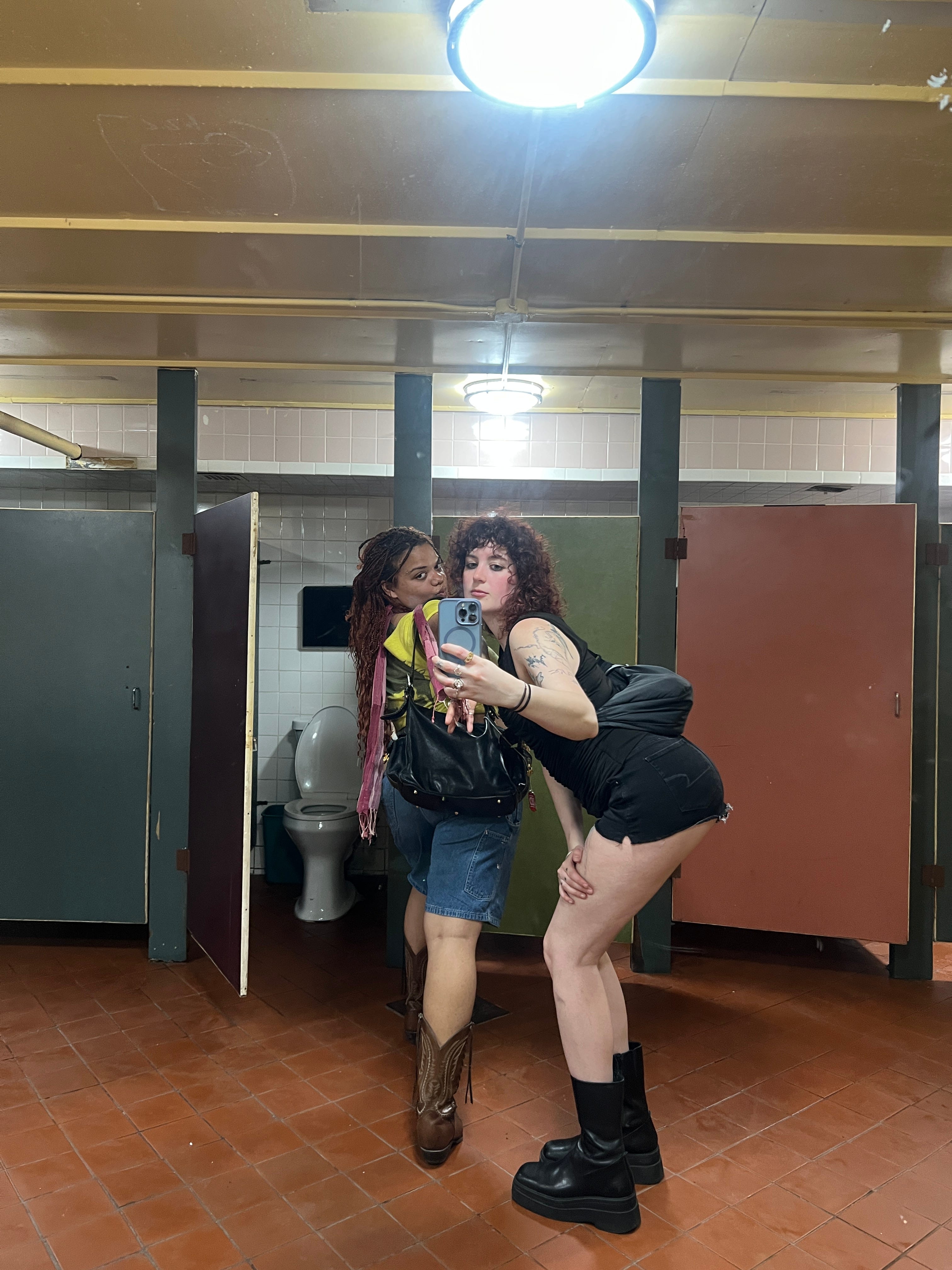
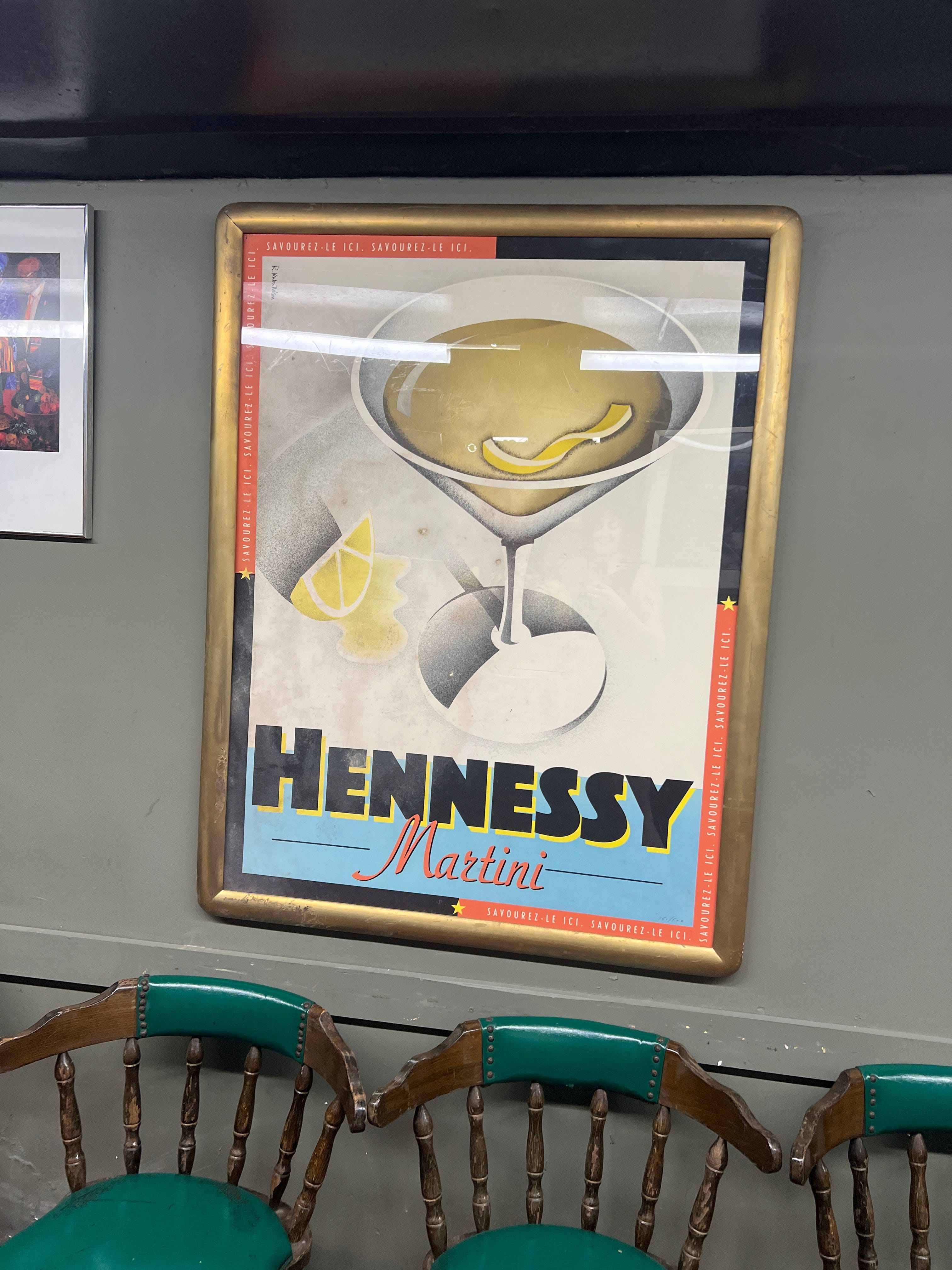
Dripping in sweat and out of breath, Jaz and I eventually wandered downstairs to the lower level bathroom. Down a set of stairs, it felt cavernous, cellar-like, as a basement would, with a long hallway displaying oversize posters, green leather chairs, out-of-commission arcade games and an abandoned incense holder left in a corner.
Basements like these are special, not just because they’re full of all the stuff you’re not supposed to see upstairs, but because these basements always have bathrooms with a zillion stalls and plenty of space to look in the mirror, adjust your makeup and outfit, and of course these days, take a selfie or two or two hundred. The basement bathroom of the synagogue I attended as a child, the basement banquet room that served baklava once at the Greek Orthodox church in the neighborhood I grew up in for a holiday I can’t remember, the basement of churches and funeral homes, quiet and tiled in linoleum, the unassuming basement of The Broadway bar in Bushwick, the basement bathroom at Gottscheer Hall in Ridgewood, accompanying pageants and galas.
These bathrooms aren’t claustrophobic double stalls, single-use, or with barn doors that don’t lock, bathrooms made for just waiting in line like some happening new restaurant with no reservations. This kind of bathroom is for all pissing crowds to converge, and even though it’s empty on a Saturday except for me and Jaz, my heart is full and I love it.
Back up from the bathroom and we go outside for some air. The smoking ‘patio’ is filled with crates and crates and crates of glass beer bottles, which I imagine are being collected for recycling. There are giant barbeque drums which I can imagine a full pig spit-roasting on in the thick of summer. As we smoke our cigarettes, one of the women from the dance floor comes out and sits next to us. Her name is Cassandra, she says.
As we chat she tells us she’s a hospice worker and she tries to come here every weekend to release from the stress of the week. She says that on the weekend when she goes dancing she becomes another version of herself, she becomes Lulu. Cassandra/Lulu goes on to say that she has work at 8am tomorrow, on Sunday morning, but this—dancing—and dancing with others who feel the same way, is always worth it, for her it’s necessary.
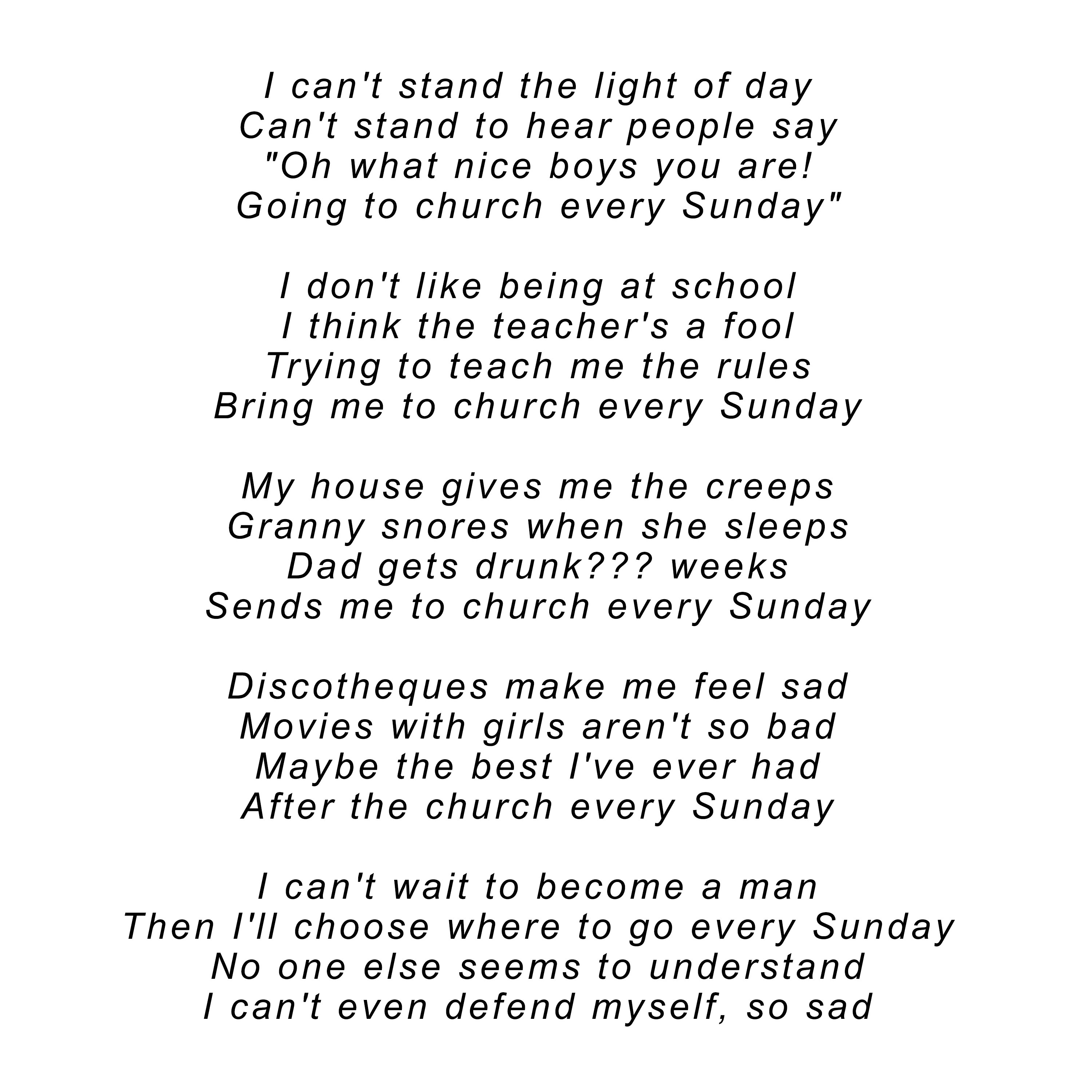
When we finish our cigarettes and say goodnight, it’s barely midnight. Good—I can still go to bed at a reasonable hour. I wait for Jaz to get her Uber, then I get back on my bike. In no rush to return home, I bike to Every Sunday by Crazy Gang, and in an attempt to memorize my route off Google Maps, realize I’ve lost my sense of direction. I’m going in circles through Hasidic Williamsburg, which is Brooklyn’s Bermuda Triangle. North is South and East is West and nothing makes sense. I check Maps and eventually I start to recognize where I am again.
If there was one thing Jaz and I agreed on that night, it’s that Sugar Hill felt special, special in the way we wanted to tell all of our friends and everyone we knew you just had to come here to dance. Special enough that we could see ourselves throwing a party there. Special that it also felt like the kind of place you want to keep a secret, a place you want to gatekeep, to keep away from whoever is just looking for the next place to take over.
But then again I’m an optimist: Sugar Hill has had plenty of press over its 45 years and seems to be handling the changing of the neighborhood with a protective eye. My intuition tells me it has no intention of going anywhere anytime soon, that it has a spirit that has dissuaded the most online kinds of crowds.
“Eddie has a sense of humor about these new crowds — throngs of young transplants that pack the club on weekends to dance until the early morning hours. “On certain nights we rent it out to the hipsters,” he said.” — Gordon, Arielle, “From Disco to Techno, He’s Seen It on Sugar Hill’s Dance Floor" The New York Times, April 5, 2019.
Because Sugar Hill is an institution, nothing less. Not to be taken for granted—because how often do you get to go somewhere where you find yourself having a drink with the owner? Or listening to a DJ you can’t find online? The beauty is that these places exist all over New York City— long-standing locales and members-only clubs, unassuming dance halls with loud music and no line out the door, the multi-generation bars that dot across neighborhoods never mentioned once in a news article. For some of these places, the only thing that will get you there is your curiosity.
When I finally return home, I hop in the shower and scrub the sweat and night off my skin. Then I go to bed, go to sleep. The very next morning I pull up my computer and start typing, so that I remember my first night at Sugar Hill, so that one day, maybe it will inspires yours.
Alternatively, you might be thinking: You’re late, idiot!